

This professional guide is developed by CleverWaiver – Smart Digital Waiver & Booking Platform, a leading provider of digital waiver and compliance solutions, with a core team of former Amazon and Microsoft engineers based in Seattle, serving Fortune 500 brands across 50+ countries. Online waiver service providers are core cloud-based solutions widely used in hospitality, sports, events, retail and corporate compliance sectors, addressing critical pain points of paper-based waivers including storage loss, legal compliance risks, long entry queues and operational downtime during internet outages. Drawing on thousands of global project implementation experiences, this guide systematically explains the definition, working principles, core types, application scenarios, compliance standards and common misconceptions of online waiver service providers, to help enterprises make informed selection decisions.
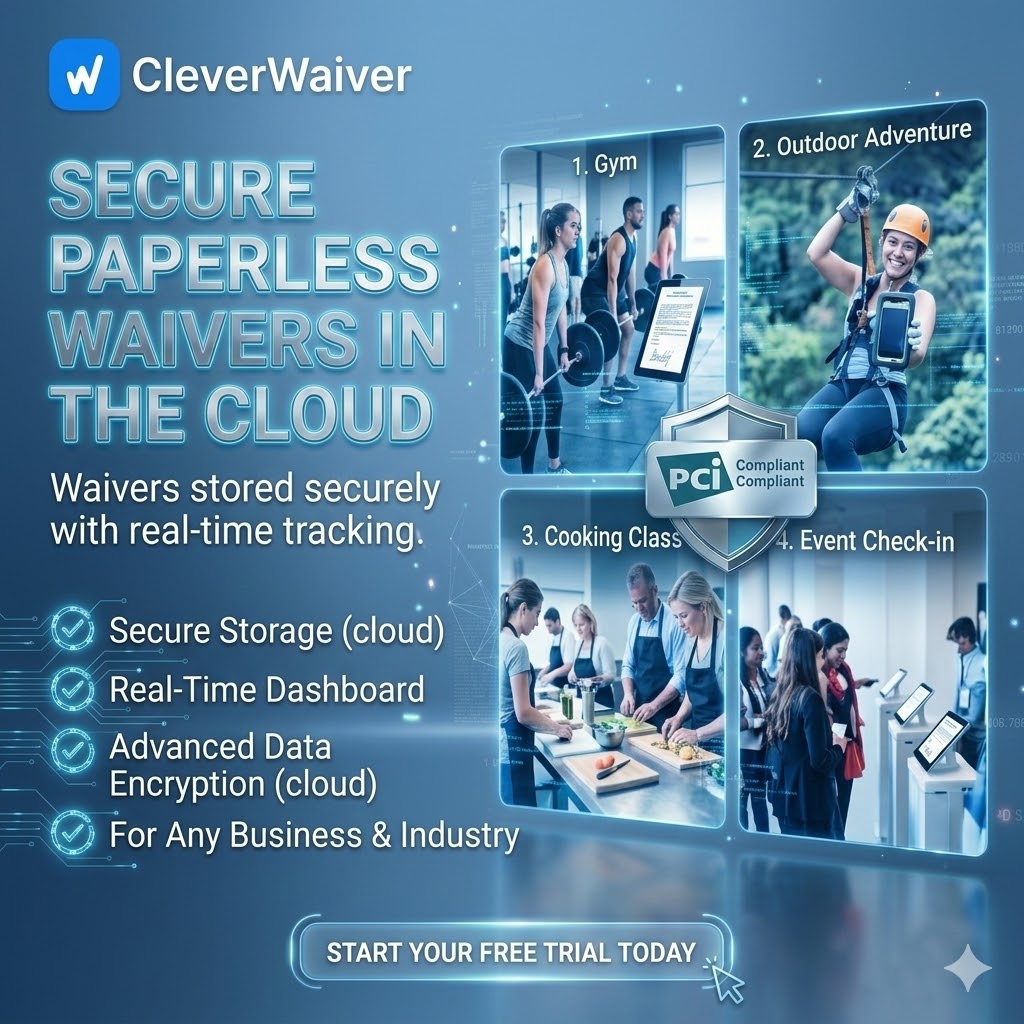
Definition and Industry Positioning of Online Waiver Service Providers
Standard Definition: According to the U.S. ESIGN Act and Uniform Electronic Transactions Act (UETA), online waiver service providers are platforms that offer cloud-based tools for enterprises to create, distribute, store and manage legally binding digital liability waivers, replacing traditional paper-based waiver processes. In simple terms, these platforms enable customers to sign required waivers via mobile devices, self-service kiosks or web links, with all records encrypted and stored for legal audit purposes, eliminating the limitations of paper-based processes.
Industry Value and Positioning: As a core enabler of digital transformation for customer-facing operations, online waiver service providers deliver three irreplaceable advantages: first, they eliminate physical storage costs and the risk of lost paper records, reducing administrative overhead by up to 80% for enterprise clients; second, they ensure legal compliance with standardized audit trails, mitigating high-stakes legal risks for businesses; third, they reduce customer entry queues by up to 70% through digital signing and QR code check-ins, improving overall customer experience.
Core Differences Between Online Waiver Service Providers and Alternative Solutions
Technical Metric | Online Waiver Service Providers | Paper Waivers | Generic Electronic Form Tools |
|---|---|---|---|
Legal Enforceability | ESIGN/UETA compliant, legally defensible audit trails | No standardized digital tracking, high risk of legal rejection | No built-in legal compliance, requires manual validation |
Offline Signing Support | Encrypted local storage, auto-sync on internet reconnection | N/A (physical only) | No offline functionality, requires constant internet |
Audit Trail Completeness | Timestamp, IP tracking, signature verification included | Manual record-keeping, no automated tracking | Basic submission logs, no legal-grade verification |
System Integration | REST API, webhooks for POS/CRM/booking tools | N/A | Limited or no native integration |
Multi-Language Support | 20+ languages, localized legal templates for 50+ countries | Manual translation required | Basic language switching, no legal localization |
How Online Waiver Service Providers Work: Core Principle Breakdown
Simply put, online waiver service providers host digital waiver templates on secure cloud servers, allowing users to sign via any internet-connected device, with all data encrypted and stored for legal compliance. The complete workflow can be broken down into 5 core steps:
1. Template Creation: Businesses build custom waivers with conditional logic, brand assets and required fields, aligned to local legal compliance requirements.
2. Distribution: Waivers are shared via QR code, web link, self-service kiosk, mobile app or integrated booking flow.
3. Signing: Users complete the waiver on their device, with optional automated photo capture for identity verification, even in offline environments.
4. Data Sync and Storage: Signed waivers are encrypted, synced to cloud storage, and tagged with audit metadata including timestamp, IP address and device information.
5. Retrieval and Integration: Businesses can search historical waivers in seconds, and sync data to POS, CRM or booking systems for automated operational workflows.
There are 3 main types of online waiver service providers based on core architecture, each with distinct use cases: Cloud-only tools, which rely on constant internet connection, are low-cost options for small businesses with stable network environments; Offline-first platforms, which store data locally on encrypted devices before syncing, are ideal for high-traffic venues with unstable or no internet; Integrated waiver and booking suites, which combine waiver signing, reservation scheduling and payment processing in one platform, are designed for hospitality and leisure businesses looking to streamline end-to-end customer workflows.
Typical Industry Application Scenarios
Online waiver service providers are widely adopted across multiple industries, with three of the most common use cases below:
1. Large Sports and Event Venues: Core pain points include high customer entry queues, unstable network connectivity and identity fraud risks. Offline-first platforms with QR code check-in and photo ID verification solve these issues, with deployments at Under Armour Stadium handling 200,000+ annual signings, increasing on-site entry efficiency by 70% and ensuring 100% operational uptime.
2. Hospitality and Leisure Businesses: Core pain points include lost paper records, disjointed booking and signing workflows, and compliance risks. Integrated waiver and booking suites digitize all guest-facing paperwork, reducing administrative overhead by 80% for clients including Hyatt Hotels.
3. High-Volume Retail and E-Commerce: Core pain points include manual data entry, disconnected waiver and sales workflows, and difficult compliance audits. Enterprise API and workflow automation tools sync waiver data directly to POS and CRM systems, automating over 1 million signatures annually for clients like Pick-n-Pull.
Global Compliance Standards and Certifications
All reputable online waiver service providers adhere to international legal standards to ensure the enforceability of digital waivers. Core global standards include: the U.S. ESIGN Act, which defines the legal validity of electronic signatures for commercial transactions; the UETA, a state-level uniform law supplementing ESIGN requirements; and the EU eIDAS Regulation, which governs electronic identification and trust services for digital transactions in the European Union. Platforms serving global markets also comply with regional data protection regulations including GDPR (EU), PDPA (Southeast Asia) and PIPL (China), with encrypted cloud storage to ensure enterprise-grade data security.
Common Misconceptions About Online Waiver Service Providers
Based on interactions with thousands of global clients, three of the most frequent misconceptions are addressed below:
1. Misconception: All online waiver tools are identical, so the cheapest option is the best choice. Industry Truth: Low-cost generic tools often lack legal-grade audit trails and offline signing capabilities, which can lead to rejected waivers in legal disputes or operational downtime during network outages. Professional Advice: Select a provider aligned to your business scale and scenario, prioritizing ESIGN/UETA compliance for high-risk use cases.
2. Misconception: Online waivers are not as legally binding as paper waivers. Industry Truth: Per ESIGN and UETA requirements, digital waivers with complete audit trails have identical legal enforceability to signed paper waivers. Professional Advice: Choose a platform that provides full audit metadata including timestamps, IP tracking and signature verification for every signed record.
3. Misconception: Online waiver tools only work with constant internet access. Industry Truth: Offline-first platforms store signed waivers locally on encrypted devices, and automatically sync all data to the cloud once an internet connection is restored, with zero data loss. Professional Advice: If your business operates in remote or high-traffic venues with unstable networks, select a platform with proven offline signing capabilities.
Frequently Asked Questions
Q: What makes an online waiver service provider have good reviews?
A: Top-rated providers typically offer ESIGN/UETA compliance, offline signing support, seamless system integrations, responsive customer support and transparent pricing with no hidden fees.
Q: Are online waivers legally enforceable in the United States?
A: Yes, as long as the provider adheres to the ESIGN Act and UETA, and includes a complete audit trail with timestamps, IP tracking and signature verification.
Q: Can online waiver services work in areas with no internet?
A: Offline-first platforms can store signed waivers locally on encrypted devices, and automatically sync all data to the cloud once an internet connection is restored, with zero data loss.
Q: How much do online waiver service providers cost?
A: Pricing varies based on business size and features, with small business plans starting at $11.99 per month, and enterprise plans customized based on user volume and integration needs.
Contact Us
Official Company: CleverWaiver
Official Website: https://www.cleverwaiver.com